News
Articles
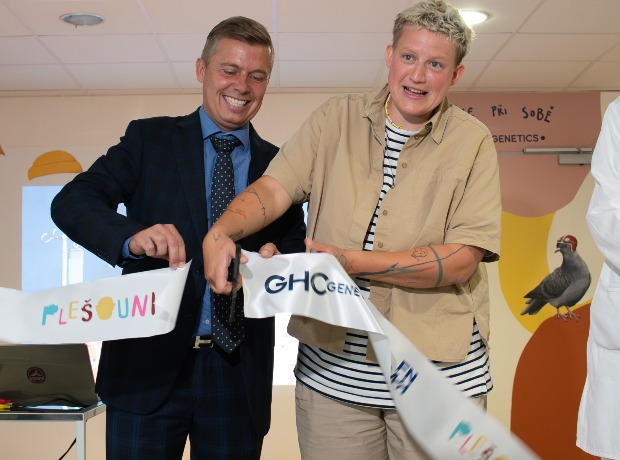
Thanks to GHC Genetics, the ‘Plešouni’ are now adorning the corridors of the paediatric oncology ward in Motol
On Friday 28 August at 12.00, the grand opening of the newly refurbished corridor at the Department of Paediatric Haematology and Oncology (Motol and Homolka University Hospital, Motol site, 5th floor) took place. The new design of the space was created as part of the Plešouni project, conceived by the artist Eliška Soffer Podzimek, and will now bring a world full of colour, imagination and joy to young patients and their loved ones. The event took place with the significant support of GHC Genetics, which has been providing long-term financial backing for the entire Plešouni project.
The latest issue of GHC Genetics magazine (3/2026) has been published
Dear readers,
The latest issue of GHC Genetics magazine offers a look at the diverse fields of modern medicine in which genetics is finding ever-wider application. In an interview with our colleague Tereza Lackner, we take a look behind the scenes at healthcare reporting and communication with health insurers. Although this is an area that often remains hidden from patients, its proper functioning is an essential part of the day-to-day running of a healthcare facility. The specialist section of the magazine focuses on the genetic links in addiction medicine and the issue of co-occurring disorders, where current findings in the fields of genomics and epigenetics are opening up new possibilities for personalised care. There is also a case report by Dr Kristýna Kroupová focusing on Stickler syndrome, which highlights the importance of interdisciplinary collaboration and the benefits of modern genetic diagnostics in identifying rare hereditary diseases. We also present an article on polycystic kidney disease, which emphasises that clinical diagnosis alone may not be sufficient and that molecular genetic testing plays a crucial role in determining the prognosis and in the care of other family members. We hope you find this issue inspiring.
Two scholarly articles from the journal *Pohybové ústrojí* featuring Dr. Veronika Krulišová
In the latest issue of the journal "Pohybové ústrojí" (Vol. 32, 2025, No. 1 | Publication date: February 28, 2026), MUDr. Veronika Krulišová, Ph.D., along with other authors, published two scientific papers related to osteogenesis imperfecta:
Representatives from the GHC Genetics laboratory attended the prestigious ESHG 2026 conference
We attended the prestigious ESHG 2026 conference, which is one of the leading European events in the field of human and molecular genetics. During the conference, we attended a series of specialized lectures and workshops focused on the latest findings, technologies, and trends in genetic diagnostics. The conference was highly beneficial for us and provided a great deal of inspiration for the further development of our laboratory practices. We were particularly intrigued by the new possibilities of using Trinity technology for the AVITI sequencer, which can significantly streamline and shorten time-consuming sequencing experiments. We also gained new insights into long-read sequencing, which opens up further possibilities for expanding genetic testing.
GHC Genetics Now Offers Biochemical Blood Tests
GHC Genetics now offers a range of blood biochemistry tests, which are a key tool for assessing health and diagnosing various diseases. Our tests cover important parameters such as lipid, glucose, and enzyme levels, allowing us to monitor metabolic processes and organ function. Thanks to modern technologies and precise analytical methods, we guarantee fast and reliable results that help physicians provide optimal patient care. GHC Genetics focuses on a personalized approach, which is why we offer tests tailored to each client’s needs. Our experts are ready to provide support and explain the results, ensuring that every client has a clear understanding of their health status. Discover how our biochemical tests can contribute to your health and well-being. This offer is intended exclusively for self-paying clients.