A revolutionary treatment for certain types of cancer, with a 99% success rate, is coming to the Czech Republic. The first patient will receive it as early as June.
A new CAR-T therapy is being introduced in the Czech Republic’s hematology-oncology field, with the first patient set to receive it as early as June. This modern form of gene therapy, which uses the patient’s own T-lymphocytes, represents a major breakthrough in the treatment of certain serious cancers. As one of the first countries in Europe, the Czech Republic will thus have all six therapies approved in the European Union available. The General Health Insurance Company (VZP) announced this in a press release.
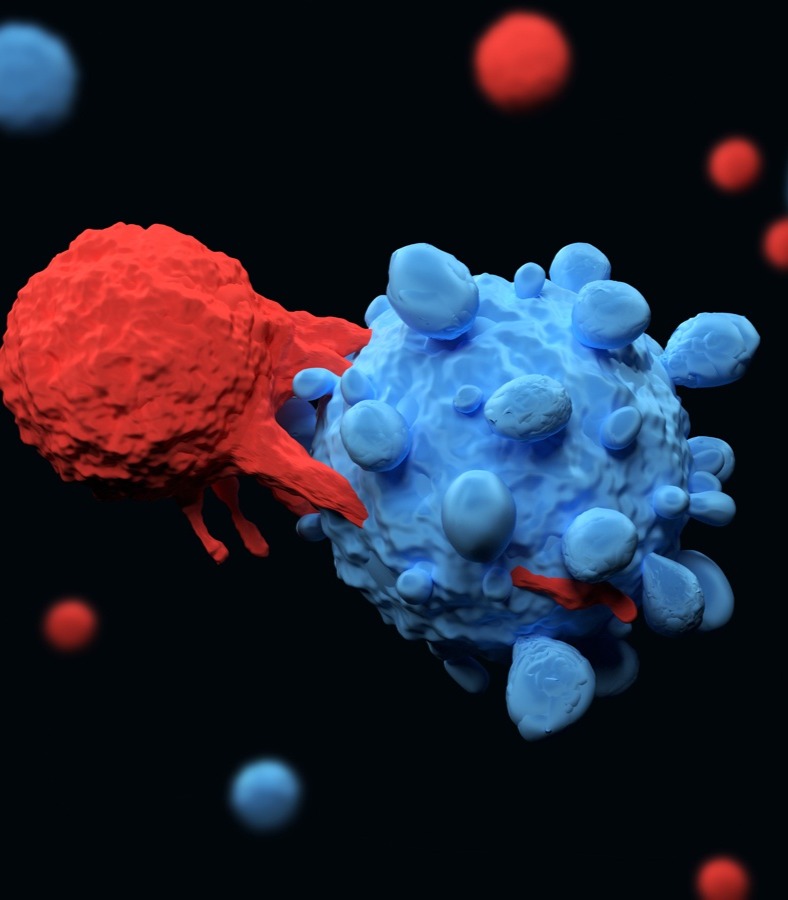
In CAR-T therapy, experts genetically modify the patient’s T-lymphocytes in a laboratory setting so that they can recognize and destroy cancer cells. They are then reintroduced into the patient’s body.
There are currently 6 approved CAR-T products in the European Union. And all of them are now available to Czech patients thanks to coverage by the public health insurance system. This has placed the Czech Republic among the first European countries to have a complete portfolio of all approved CAR-T therapies available.
Positive response in 99% of patients
The newly available therapy is primarily intended for patients with multiple myeloma, a serious blood cancer originating in the bone marrow. It is primarily intended for adult patients with multiple myeloma who have already undergone at least one previous therapy.
The principle of the treatment lies in utilizing the patient’s own immune system. An individualized medicinal product is prepared from collected white blood cells, which is “tailored” to the specific patient. “The newly introduced CAR-T therapy has an exceptionally good response rate among patients; approximately 99% of patients respond to the treatment. VZP estimates that the newly introduced CAR-T therapy could be administered to up to 80 of our clients by the end of 2028,” explains VZP Director Ivan Duškov.
Czech patients have been waiting a long time for CAR-T therapy. This is due, among other things, to high global demand and limited production capacity. “This shows just how extraordinarily effective this treatment is. I want to commend VZP for their exceptionally constructive and swift action. I am very pleased that the drug is already being manufactured for the first patient in the Czech Republic and will be available to them in June. The possibility of early use following the first relapse of the disease will allow for the most effective use of this unique treatment,” said Roman Hájek, Head of the Department of Hematology and Oncology at Ostrava University Hospital. According to him, patients will appreciate the fact that this is a one-time treatment, which will improve their subsequent quality of life.
An exceptionally technologically demanding process
CAR-T therapy is used not only for multiple myeloma but also for selected other hematological malignancies. Its groundbreaking nature lies in its mechanism of action. After returning to the body, the modified immune cells actively seek out tumor cells and destroy them. “For certain diagnoses, CAR-T therapy can significantly alter the previously poor prognosis and offer patients a chance even where treatment options were very limited,” explains Duškov.
Genetic modification of cells is a technologically demanding process that only a limited number of specialized laboratories in Europe can perform. During production, T-lymphocytes are equipped with a special receptor that allows them to recognize specific molecules on the surface of tumor cells and target them for attack.
You may be interested in
Once production is complete, the modified cells are transported back to the treatment center and administered to the patient in a single intravenous infusion. Production of the therapeutic product takes several weeks. The entire process, from cell collection to their return to the patient—referred to as “vein-to-vein”—usually takes 22 to 28 days. Production and logistics are handled by specialized facilities in countries such as Germany, Belgium, or the United Kingdom.
It is precisely this complex production and logistics that are among the main obstacles to the wider adoption of CAR-T therapies. Another significant limitation is the very high cost of treatment. In the Czech Republic, therefore, these products may only be administered at highly specialized hematological-oncological care centers.
Source